
The Cumberland Blog
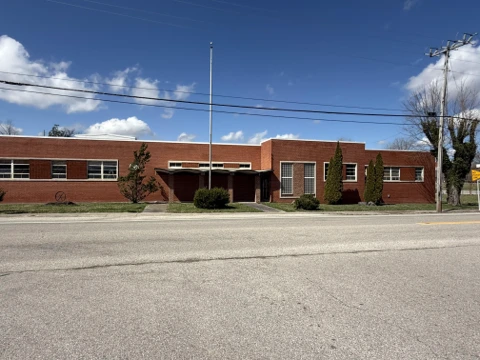 Front view of the current Ely Walker Building
A few weeks ago, we asked a simple question on Facebook.
We shared photos of the building at 203 S. Chestnut Street and asked the people of Monterey: Do you have memories of this place?
We hoped for a few responses. What we got was something else entirely.
Within days, the comments were pouring in: stories from women who had worked those machines straight out of high school, grandchildren who remembered waiting outside the glass doors for their grandmothers to finish a shift, and families with two and three generations connected to the same building. People shared photographs they had held onto for decades. They named supervisors, recalled inside jokes, and described the pride they felt showing up to work every day inside those brick walls.
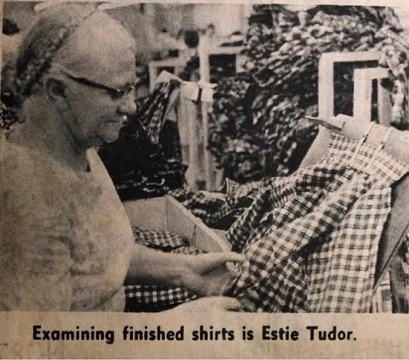
Patti Tudor Looper: “My grandma Estie Tudor retired from Ely Walker in the early 1970s. She started work at the hosiery mill in Monterey at the age of 15 and then moved on to the shirt factory, where she retired at the age of 62. As a child, my brother and I would pick the strings off her clothes when she got off work. This happened because she clipped hanging threads off the shirts while inspecting them.”
We were moved. And we realized that the story of the Ely Walker Building in Monterey, TN, deserves to be told properly, with all the history we know, and with an honest invitation to help us fill in what we don’t.
A Town in Transition: The History of Monterey
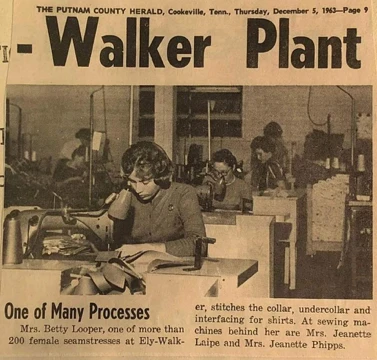
Photo provided by Jeannie Templeton
To understand why this building matters so deeply, you must understand the history of Monterey and where this town came from.
The building tracks back to 1920, when it was the Cumberland Mountain Coal Company, and this town was still built on coal. It was hard, honest work that kept families fed and lights burning for decades. But as the mines began to close and the industry shifted, the building shuffled through many hands while Monterey needed a new spark.
That spark came from garment manufacturing, and it came right here on Chestnut Street.
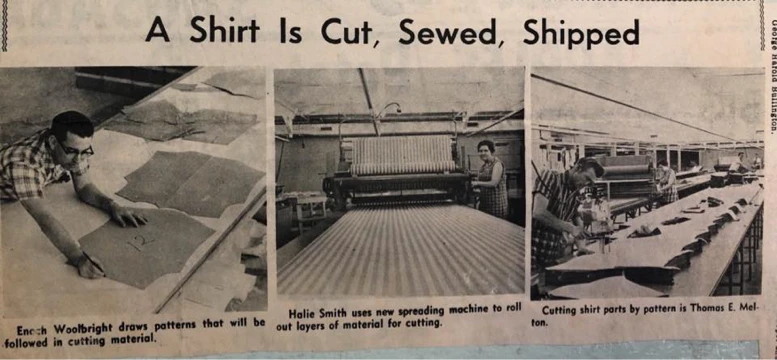
Patti Tudor Looper: “This is from a scrapbook I inherited from my Pa, Lloyd Tudor. My Ma, Estie Tudor worked there many years before retiring in the early 1970s.”
As coal faded, the needle trades grew. The building became home to the General Shirt Corporation, part of the broader Ely, Walker & Company network, founded in 1878 by Frank Ely and David Walker. It operated under Nashville-based Washington Manufacturing Company, which at its peak was one of the largest private companies in the United States, running a network of regional factories across Tennessee and beyond.
The Monterey plant was a vital piece of that network. Workers here produced high-quality western wear and work shirts under the “Ely Cattleman” and “Plains” labels, staples in Sears and J.C. Penney catalogs, worn by people in states who had never heard of Monterey, Tennessee. Yet, they were wearing something made here, by your neighbors, all the same.
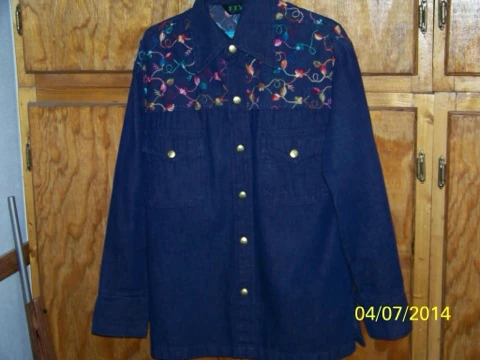
Commented by Janice Powell Andrews: “This is an Ely & Walker jacket. Made at the Monterey plant 50 years ago. It is still in perfect shape!”
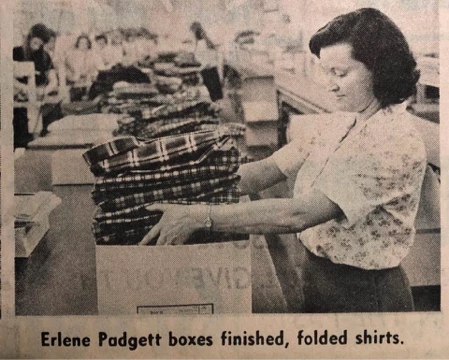
Photo: Patti Tudor Looper
For the women of Monterey, especially, this factory was a turning point. Through the 1950s and 60s, it was the primary employer for local women, offering steady wages, a sense of pride, and the foundation of a working middle class, built shift by shift, stitch by stitch. People came straight out of high school and stayed for decades. Supervisors knew every worker by name. The morning whistle could be heard for miles.
It wasn’t just a factory. It was a community.
When the Machines Went Quiet
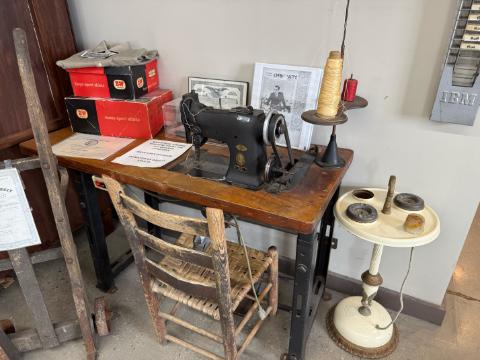
Sewing Machine used in the Ely Walker building that is currently in the Monterey Depot Museum
Like many industrial towns across America, Monterey felt the ground shift in the late 1980s. When Washington Manufacturing filed for bankruptcy in 1988, the sewing machines stopped humming. The building that had been so loud and so full of life went still. The property fell largely dormant. Without consistent investment and a clear purpose, a building of that age begins to show the weight of time. To a passing eye, it became easy to see it as “just another old building.”
A New Neighbor: Adams USA
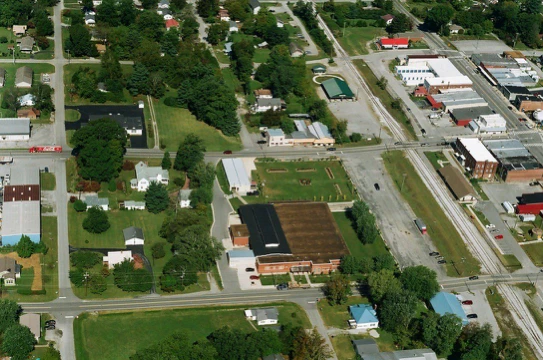
Photo: Aerial view of the Ely Walker Building in Monterey, TN
After Ely Walker and several years of neglect and different ownerships, the building found a new connection, this time to one of the great entrepreneurial stories of the Upper Cumberland region.
Joe Adams was a Cookeville businessman with a restless, inventive mind. According to the people who knew him best, Joe began experimenting with fiberglass at home, working with the materials in unconventional ways. He eventually landed on something that would quietly change high school athletics across America: a plastic face guard for football helmets. What started as tinkering in his own home became Adams Plastics, founded in Cookeville in 1952, which grew into Adams USA, ultimately the largest manufacturer of football protective equipment in the country, supplying helmets, shoulder pads, faceguards, and knee pads to school athletic programs nationwide.
The building on Chestnut Street became part of that story. After the shirt factory closed and sat empty, Adams USA leased the building from the city and used the space for storage and assembly, a practical solution for a growing company that needed room for its inventory of pads, helmets, and equipment. Local history suggests the arrangement was made on remarkably generous terms, a handshake kind of deal that reflected the way things worked in a small Tennessee town.
Adams USA was eventually acquired by Schutt Sports in 2014, closing out a chapter that had begun with one man’s kitchen-table inventiveness more than six decades earlier.
Once again, the building went empty.
The Jared Family’s Commitment to the Ely Walker Building in Monterey, TN
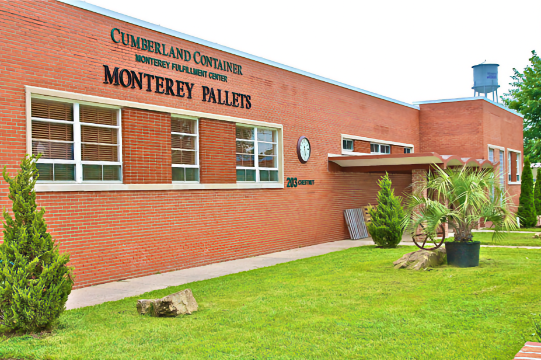
Front view of the Ely Walker Building in the early 2010s
In 2009, Eugene Jared, founder of Cumberland Container, purchased the building to use as a fulfillment center to pack books and DVDs. Today, the Ely Walker Building is still owned by the Jared family, who continue to own and operate Cumberland Container. Following the closure of the Perdue Chicken Plant, Cumberland is currently Monterey’s largest employer, with over 85 full-time employees and an annual payroll of approximately $5.3 million that flows back into local stores, homes, and businesses across this community.
Since purchasing the Ely Walker Building, the Jared family has poured consistent care and investment into the property in the hopes of revitalizing the building and making it a viable part of the community once again. As part of this effort, a new roof was installed on the metal building in the back, and updated bathrooms were added to ensure the space was ready to be rented to local businesses. This investment paved the way for the White County Co-op to open the Monterey Farmers Co-op, which now successfully serves the citizens of Monterey and the surrounding areas. Furthermore, a substantial portion of the Ely Walker Building’s basement is now utilized by the Co-op for essential storage.
The Monterey Farmers Co-Op now operates in space rented from Cumberland Container.
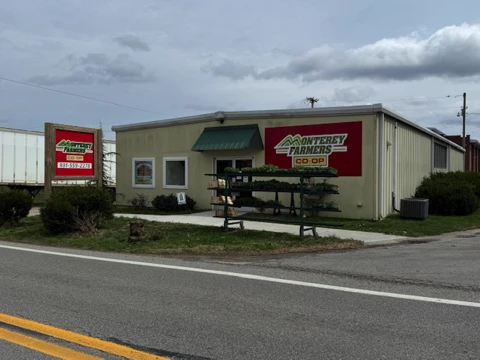
The Monterey Farmers Co-op now operates in space rented from Cumberland Container.
Beyond the industrial improvements, the family has also focused on the beauty of the property. Visitors can enjoy the garden filled with Crape Myrtles that bloom vibrantly every summer, adding a natural warmth to the historic site.
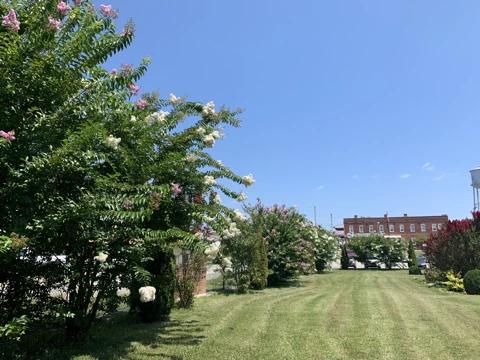
The grounds of Ely Walker building currently
Considerable money was spent reinforcing the floor and putting a new roof on the building. The north wall of the building was opened to install multiple windows to bring in natural light to both the upstairs and downstairs. LED lights were installed, and the office space was completely renovated.
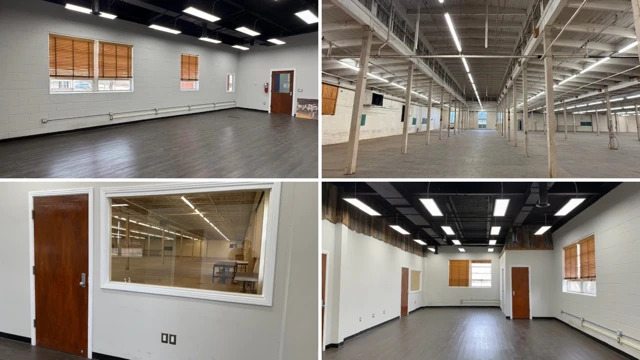
Newly renovated rooms
In 2026, renovation work continues. Fresh paint has gone up in the bathrooms, kitchen, and break room. Updated fire and life safety systems are being installed throughout the building. New heating is being added, along with WiFi infrastructure and cooling in key areas.
These aren’t just cosmetic touches. They’re part of an even larger investment the family is putting into Cumberland Container, which will soon announce the largest single investment in its 57 years. This project will create new high-paying jobs and make the Ely Walker Building strategic to the company’s overall growth strategy. Cumberland has recommitted to its roots in Monterey and has chosen to grow, chosen to bet on this building, and chosen to bet on Monterey, the same way this town bet on itself when the coal mines closed, and the needle trades gave it a second life.
The next chapter of the Ely Walker Building is being written. And if the response to our little Facebook post taught us anything, it’s that this community is ready to be part of it.
Help Us Tell This Story
Before the Shirt Factory: The Hosiery Mill Years
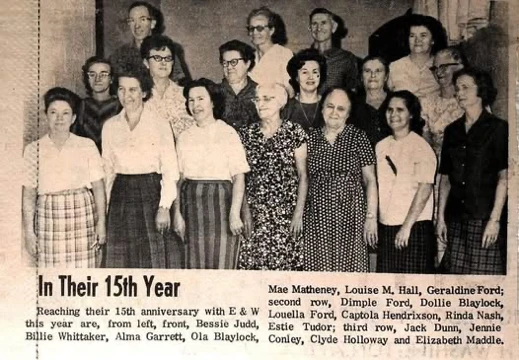
Photo provided by Jeannie Templeton
The building at 203 S. Chestnut Street has stood on that corner for well over a century. Based on what we know from community memory and local records, we believe the building was constructed somewhere in the early 1900s, but we’d love to nail down the exact date.
Do you know when this building was first constructed? If you have access to old county records, family documents, or photos that might help us date it, we’d love to hear from you.
What the community has told us is that the building’s industrial life began as a hosiery mill. It was one of the first significant manufacturing employers in the area, and it set the stage for everything that came after.
If your family has a connection to the hosiery mill era, we’d love to hear about it. That chapter of the building’s story is still being written.
The Ely Walker Building belongs to Monterey’s history, which means its story belongs to all of you. If you have memories, photographs, documents, or family stories connected to any era of this building, we want to hear from you.
Drop a comment below, send us a message, or share this post with someone who might know more.
Together, we can make sure this story is told the right way, completely, honestly, and with the community at the center of it, where it has always belonged.
Frequently Asked Questions (FAQs)
1. What is the historical significance of the Ely Walker Building in Monterey, TN?
The building was constructed in the early 1900s. Its industrial life began as a hosiery mill, one of the first major manufacturing employers in the area. Later, it became a vital garment factory for the General Shirt Corporation, producing “Ely Cattleman” and “Plains” western wear. In the 1950s and 60s, it served as the primary employer for local women, helping establish a working middle class in Monterey.
2. What has happened to the building in recent years?
After the garment factory closed in 1988, the building was used by Adams USA, at the time the country’s largest manufacturer of football protective equipment, for storage and assembly. In 2009, Eugene Jared, founder of Cumberland Container, purchased the property. Since then, the Jared family has consistently invested in the building to make it a viable part of the community once again.
3. What major renovations are currently being made to the property?
The Jared family has already reinforced the floors, installed a new roof, added LED lighting, and completely renovated the office spaces. As of 2026, work is continuing with fresh paint, updated fire and life safety systems, new heating, and the installation of WiFi infrastructure.
4. Why is this building strategic for Monterey’s economic future?
The building is a key part of the growth strategy for Cumberland Container, which is currently Monterey’s largest employer. A major upcoming investment in the company is expected to create new high-paying jobs, with the Ely Walker Building playing a central role in that expansion.
5. How can the community help tell the building’s story?
The current owners are seeking community help to fill in historical gaps, particularly regarding the building’s exact construction date and its era as a hosiery mill. If you have memories, photographs, or family documents related to any period of the building’s history, you can share them by commenting below or on our Facebook post. You can also message us.
6. Does the basement of the building flood, and is there a history of this problem?
Yes, flooding is a major challenge for the Ely Walker Building in Monterey, TN. The basement has flooded several times in the past 10 years, causing considerable damage. The Jared family has spent substantial funds to minimize this destruction, including installing eight (8) sump pumps and clearing culverts on the property. However, these efforts cannot solve the fundamental issue of drainage off the property; for that, the support of the city is required. While an engineer has been tasked with finding a solution, progress to date has been slow.
Choosing packaging that is just "good enough" is a costly compromise. In today's competitive landscape, your packaging is more than a protective layer: it’s your customer's first physical interaction with your brand, a vital tool for logistical efficiency, and a key factor in product protection. Stop wasting valuable hours sifting through standardized options that fail to meet your specific needs and start planning your packaging through strategic design. This solution ensures the product is perfectly engineered for performance, protection, and promotion.
Design is Your Strategic Advantage
When you partner with a packaging provider that offers a strategic design solution, you benefit from a process centered on holistic, customized design. This is why design matters:
- It Protects Your Investment: Packaging failures lead to damaged goods and lost revenue. Expert structural design minimizes material waste while maximizing product security during transit.
- It Elevates Your Brand: The structural form and graphic presentation must align with your brand identity. Having custom design ensures your packaging stands out on the shelf or arrives with a superior unboxing experience.

- It Optimizes Operations: Properly designed packaging can reduce packing time, minimize shipping costs, and improve stacking/storage efficiency—delivering tangible ROI beyond just the initial cost of the box.
- It Drives Direct Cost Savings: Strategic design isn't just about looks; it’s about the bottom line. By consulting with an expert design team, you can audit your current specifications to ensure you are utilizing the most efficient materials and dimensions, eliminating unnecessary "air" in your shipments and reducing overall spend.
The Engine of Customization: Cumberland Container's Dedicated Design & Innovation Lab
The process of strategic design demands both technology and expertise. This is where Cumberland Container steps in.
At Cumberland Container, our Design & Innovation team doesn't just sketch ideas; they engineer solutions. Our team works closely with you to ensure your packaging is not only the highest quality but also fully optimized to reduce waste and maximize your cost-efficiency. This level of customization is driven by our state-of-the-art facility and over five decades of specialized experience:
- Dedicated Design Hub: Cumberland Container offers a modern 3,200 sq. ft. design lab that is exclusively focused on structural and graphic packaging development, treating every project as a unique engineering challenge.
- Precision Prototyping and Validation: Design is proven through testing. Cumberland Container utilizes two Kongsberg CAD tables (XL46 & C24), allowing the team to rapidly produce high-precision prototypes and even facilitate quick, quality-controlled short-run production runs directly in the lab.

- Seamless Structural & Graphic Integration: Our integrated Design & Innovation team includes a full-time Graphics Artist and a full-time CAD Designer, both working seamlessly using ArtiosCAD, Illustrator, and Photoshop. This guarantees the structural integrity and stunning graphics are perfectly synchronized, avoiding last-minute production issues.
- Decades of Corrugated Expertise: Backed by over 50 years of experience in corrugated packaging, displays, and custom solutions, Cumberland Container possesses the deep institutional knowledge to design solutions that are manufacturable, efficient, and aligned with industry best practices.
Cumberland Container doesn’t just supply packaging; we design it to solve your business challenges. When you prioritize expert design, you choose efficiency, protection, and a superior brand experience.
Ready to stop compromising? Contact us at 931-839-2227 or visit the Cumberland Container website to begin the design consultation for your next custom solution.